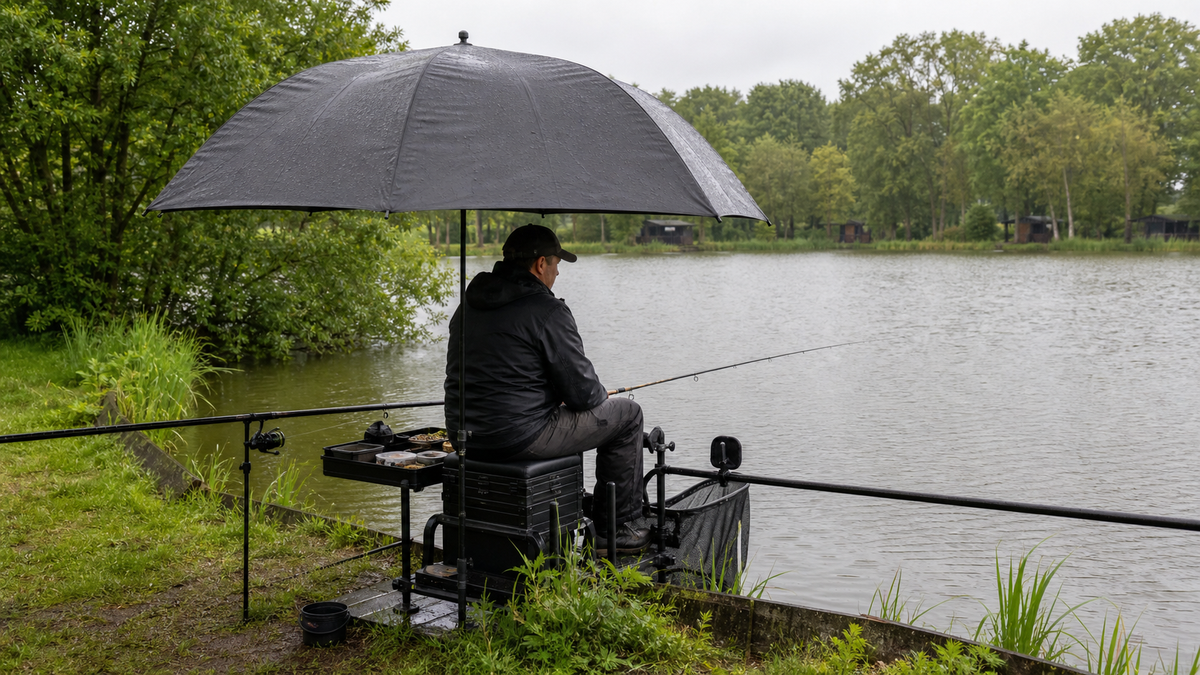
A fishing day often starts with good prospects, but the weather can change quickly. A heavy shower, bright sun or cold side wind can make the difference between continuing to fish comfortably and packing up earlier than planned. A good fishing umbrella not only protects you, but also helps keep bait, equipment and your seatbox dry or out of direct sunlight.
However, not every umbrella is suitable for every angler. A compact brolly is easy to transport, while a larger flatback model provides more free space around the seatbox. Those who mainly fish with a pole also have different requirements from someone fishing with two feeder rods on open water.
In this guide, we explain what to look for and which fishing umbrella best suits your fishing. Want to compare the available models right away? View all fishing umbrellas and brollies.
Why use a proper fishing umbrella?
A regular rain umbrella is designed for walking with. A fishing umbrella needs to remain in the same place for much longer and provide enough room for an angler, seatbox and part of the equipment. That is why fishing umbrellas are generally roomier and feature a sturdy central pole or a shape that can be positioned more effectively next to a seatbox.
Depending on the model, a fishing umbrella can provide protection against:
- rain during long fishing sessions;
- bright sun and heat on open lakes;
- cold side winds;
- wet bait and equipment;
- constantly changing weather conditions.
The best choice is therefore not automatically the largest or most expensive umbrella. The main thing is that the size, shape and mounting suit the way you fish.
1. Choose the right size
Fishing umbrellas are often measured in centimetres or inches. A compact model of around 45 inches takes up less space and is usually easier to transport. A 50-inch brolly provides more shelter around the shoulders, seatbox and bait table. Larger models can cover even more equipment, but also require more space on the bank and are more susceptible to wind.
Ask yourself three questions before buying:
- Do I only want to protect myself, or also my bait and side tray?
- How much transport length and weight am I willing to carry?
- Do I have enough space at my regular fishing spots for a large umbrella?
For mobile anglers, a more compact model is often more practical. Those who stay in the same swim for a full day and use lots of equipment around the seatbox usually benefit more from a roomier brolly.
An example of a more compact version is the Matrix Pro Over Brolly 115 cm – 45 inch. If you want more covered space, consider a 50-inch model, such as the Preston Coolmax 50 inch Brolly.
2. Round, flatback or brolly shelter?
The shape determines how much usable space you have under the umbrella.
Classic round fishing umbrella
A classic round model is versatile and suitable for many pole and feeder anglers. It provides all-round protection and is usually easy to set up. Keep in mind that the central pole can be close to the seat box or rod in some setups.
Flatback or flatside brolly
A flatback model has a flatter rear side. This allows the umbrella to be positioned closer to the seat box, leaving more free space at the front. This is useful when you need to stand up regularly, fish with a long pole or want quick access to a feeder rod.
The Cresta Climate Shield Flatside Brolly 260 cm is an example of this type. The Preston Inception Fibreglass Flatback Brolly 50 inch also uses this space-saving shape.
Brolly shelter
A brolly shelter generally offers more enclosure than an open umbrella. Such a model is ideal for longer sessions or open waters where rain and wind can easily get underneath a regular umbrella. It provides extra shelter, but usually requires more setup time and takes up more space during transport.
An example is the Korum Progress Graphite Brolly Shelter 50 inch.
3. Fishing in sun, rain or wind
Not every fishing umbrella is designed for the same weather conditions. So look beyond the diameter alone.
Primarily sun protection
If you often fish on commercial fisheries without shade, a dedicated sun brolly can be a sensible choice. Such an umbrella is designed to keep direct sunlight off your fishing spot. The Cresta Climate Shield Sun Brolly 225 cm is a current example in this category.
Frequent rain
For rainy fishing days, the quality of the fabric, seams and covered area are important. Check what each model is designed for and how much gear actually fits underneath. An umbrella that is too small protects your head and shoulders, but can still leave your side tray or bait wet.
Wind on open water
The larger the canopy, the more wind it catches. At a windy swim, stable positioning and proper anchoring are therefore more important than maximum diameter. Never leave an umbrella unsecured and do not leave it unattended in strong winds. If conditions become unsafe, folding it away is always wiser than taking risks.
4. Which fishing umbrella for pole fishing?
When pole fishing, you need plenty of freedom of movement. You move the pole forward, take topsets from the support and regularly turn to the side to pick up equipment. A centrally positioned pole can be obstructive if it is in the wrong place.
For pole anglers, these features are particularly useful:
- sufficient height above the seatbox;
- clear space at the front;
- an adjustable position;
- a flatback shape when space on the bank is limited;
- a secure attachment to or beside the seatbox.
Do not choose solely based on the largest diameter. Above all, check whether you can still work comfortably with your rod, topsets and landing net under the umbrella.
5. Which fishing umbrella for feeder and method fishing?
A feeder angler constantly watches the rod tips. The umbrella must not obstruct this view and should leave enough space to reach the rod quickly. At the same time, extra protection is welcome, as feeder anglers often fish longer sessions and have several tubs of bait or equipment beside them.
For feeder and method anglers, these points are important:
- an unobstructed view of the rod tips;
- enough room for a side tray and bait tubs;
- easy access to rod rests;
- protection from slanting rain;
- a stable setup on exposed banks.
A generous 50-inch model is a good all-round size for many feeder anglers. Those who move swims frequently or want to travel light are better off choosing a more compact 45-inch umbrella.
6. Attachment to the seatbox
A fishing umbrella does not always need to stand upright in the ground with its central pole. With a suitable brolly arm, the umbrella can be attached to the seatbox or seatbox frame. This keeps the space around your feet clear and can make it easier to position the umbrella beside or behind you.
When choosing a brolly arm, consider:
- the diameter of your seatbox legs;
- the diameter of the umbrella pole;
- the desired height and angle;
- the weight and size of the umbrella;
- stability in windy conditions.
The Preston Mega Brolly Arm is an example of an adjustable support for this purpose. Always check before purchase whether the fitting is compatible with your seatbox and umbrella.
Practical tips for safe use
A good umbrella will last longer when used and maintained correctly.
- Allow a wet umbrella to dry fully open at home before storing it.
- Regularly check the ribs, fastenings and attachment points.
- Push the pole sufficiently deep into suitable ground or use a stable attachment.
- Do not set a large brolly higher than necessary in windy conditions.
- Position the closed or flat side towards the prevailing wind.
- Pack away the umbrella when strong winds or thunderstorms make the situation unsafe.
Storing the canopy dry also reduces the risk of odours, stains and damage to the material.
Frequently asked questions about fishing umbrellas
Is a 45-inch fishing umbrella large enough?
For one angler with a compact setup, 45 inches may be sufficient. If you also want to keep a wide seatbox, side tray and bait dry, a 50-inch model generally provides more comfortable space.
What is the advantage of a flatback brolly?
The flat back can be positioned closer to the seatbox. This makes better use of the available space and keeps the front clearer for fishing.
Can every fishing umbrella be attached to a seatbox?
Not automatically. You need a suitable brolly arm, and the diameters of the seatbox legs, clamp and umbrella pole must match. Always check the product specifications.
Is a larger umbrella always better?
No. A larger model offers more protection, but is heavier, takes up more space and catches more wind. Choose the smallest size that adequately protects your fishing spot and equipment.
Which umbrella is best for short sessions?
For short or mobile sessions, a compact model is usually the most practical. It is quicker to set up and easier to carry. For full match days or long feeder sessions, extra covered space may be more important.
Conclusion: choose based on your fishing spot
The best fishing umbrella is the model that suits your style of fishing. A compact round brolly is practical for mobile sessions, a flatback provides more freedom of movement around the seatbox, and a brolly shelter offers extra protection during longer sessions. Also consider the size, transport, attachment and the weather conditions in which you usually fish.
Therefore, do not just compare the price, but above all how much usable space and protection you really need. View the current range of fishing umbrellas for pole fishing and feeder fishing and choose the model that makes your next fishing day more comfortable.